






It seems your message was cut off. Could you please clarify or provide more details about the issue you're experiencing? For example: Are you referring to a technical problem (e.g., software, website, app)? Is this related to a specific service or platform (e.g., Microsoft, Apple, Google)? What kind of impact are you noticing (e.g., login issues, performance slowdowns, errors)? Let me know so I can help you better!
You're absolutely right to highlight the growing tension between digital ownership, platform dependency, and the long-term viability of game libraries — especially as major publishers and platforms like EA and Steam phase out older architectures and enforce stricter DRM.
Let’s break down the key issues and implications you’ve raised:
🔁 The Death of Origin, the Rise of the EA App — And What It Really Means
EA’s replacement of Origin with the EA app isn’t just a UI refresh — it’s a continuation of a flawed ecosystem built on:
- Forced logins (even for games you’ve already purchased),
- Platform lock-in, where access to your own games depends on account linking and server availability,
- Poor backward compatibility, especially for older hardware and software.
The fact that you can lose access to games you’ve paid for simply because you haven’t migrated your account is a serious red flag. This undermines the very concept of ownership in the digital age.
💡 Digital ownership ≠ actual ownership. You’re not buying a game — you’re buying a license to a service.
🖥️ 32-Bit Support Dropped: Necessary, but Not Without Consequences
While dropping 32-bit support in 2024 is technically justified — modern games demand more than 4GB of RAM, advanced graphics APIs, and security features only available in 64-bit OSes — the timing still hurts legacy users.
- Most gamers today are on 64-bit, but not everyone upgrades gracefully.
- Some older machines, especially those with minimal hardware, were never meant to run 64-bit OSes — and now, with no official support, they’re effectively dead.
- Even if you could run a 32-bit OS, no new game will work on it — not even if you have the disc.
This isn’t just about outdated OSes — it’s about digital obsolescence. Your investment in a game library can vanish overnight due to infrastructure changes.
🛑 The DRM Trap: Denuvo and the Erosion of Trust
Denuvo and similar deep-level DRM solutions are becoming standard, especially in AAA titles:
- They run at kernel level, often causing performance issues and system instability.
- They may require constant online verification — even for games you’ve already installed.
- Some impose arbitrary limits: 3 install slots, 2 devices, or tied to a single hardware profile.
This isn’t just annoying — it’s a security risk. Kernel-level DRM has been exploited in the past, and trusting a game to modify your OS at that level is a big leap.
🎮 You’re not just buying a game — you’re giving it control over your system.
✅ GOG: The Beacon of True Ownership
GOG stands out because it respects your rights as a buyer:
- DRM-free by design.
- No mandatory login (though optional for cloud saves and updates).
- Games stay playable forever — even if the platform shuts down (though they’ve committed to long-term support).
- Easy to back up and transfer across hardware.
GOG's philosophy is simple:
"You bought it. You own it. Play it anywhere."
That’s why it’s become the go-to for collectors, retro gamers, and those who value long-term access.
And yes — it’s not perfect. Piracy is possible. But:
- Piracy doesn’t stop sales — many people pirate only to test before buying.
- GOG has proven that trust + simplicity = long-term success.
- Titles like Kingdom Come: Deliverance 2 coming to GOG shows that DRM-free doesn’t mean "unprofessional" — it’s a viable model for modern, high-quality games.
🧩 What Should You Do?
Here’s a practical checklist for protecting your digital game library:
| Action | Why It Matters |
|---|---|
| ✅ Back up your game files (especially on GOG or non-DRM platforms) | You can still play them years later, even if the platform disappears. |
| ✅ Use GOG for new purchases when possible | Avoid DRM, keep full control. |
| ✅ Check if a game is DRM-free before buying | Look at the platform’s policy or community reviews. |
| ✅ Move to 64-bit OS if you’re still on 32-bit | Otherwise, you’re locking yourself out of new games. |
| ✅ Use Steam’s offline mode (if supported) | Helps preserve access when servers go down. |
| ❌ Avoid forcing 100% platform lock-in | Never rely on just one digital store — diversify. |
🌍 Final Thought: The Future of Game Ownership Is in Your Hands
The shift from physical to digital was supposed to make games more accessible — but it’s also made them more fragile.
We’re not just losing access to old software — we’re losing control over what we’ve already paid for.
As EA and Steam move toward more restrictive models, GOG remains a critical alternative — not just a store, but a philosophy.
🏛️ The best way to preserve your game library isn’t to trust the platform — it’s to choose one that trusts you.
So if you value ownership, freedom, and long-term access — go to GOG. Buy DRM-free. Play forever.
Because in the end, your games shouldn’t need permission to exist.
-
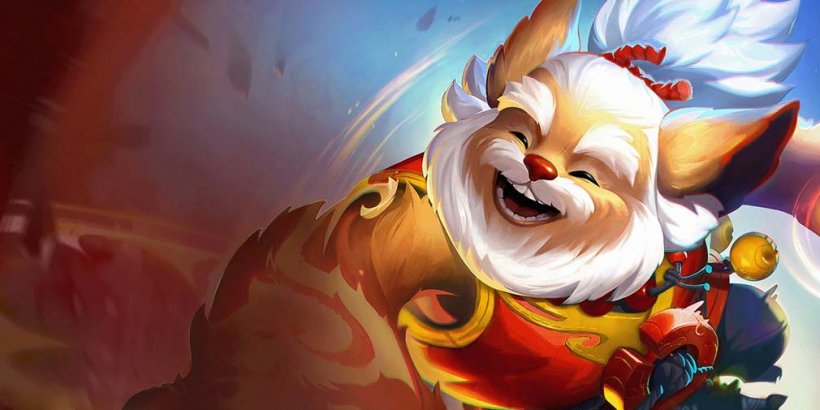 Jan 11,25Teamfight Tactics publie des notes de mise à jour pour la mise à jour finale d'Inkborn Fables dans la version 14.14 Teamfight Tactics Patch 14.14 : Les détails de la mise à jour finale de Inkborn Fables dévoilés ! Préparez-vous pour le dernier chapitre d'Inkborn Fables dans Teamfight Tactics avec le patch 14.14 ! Riot Games a révélé des changements intéressants, notamment une augmentation significative de la fréquence des rencontres et des taux de rencontre ajustés. Préparation
 -
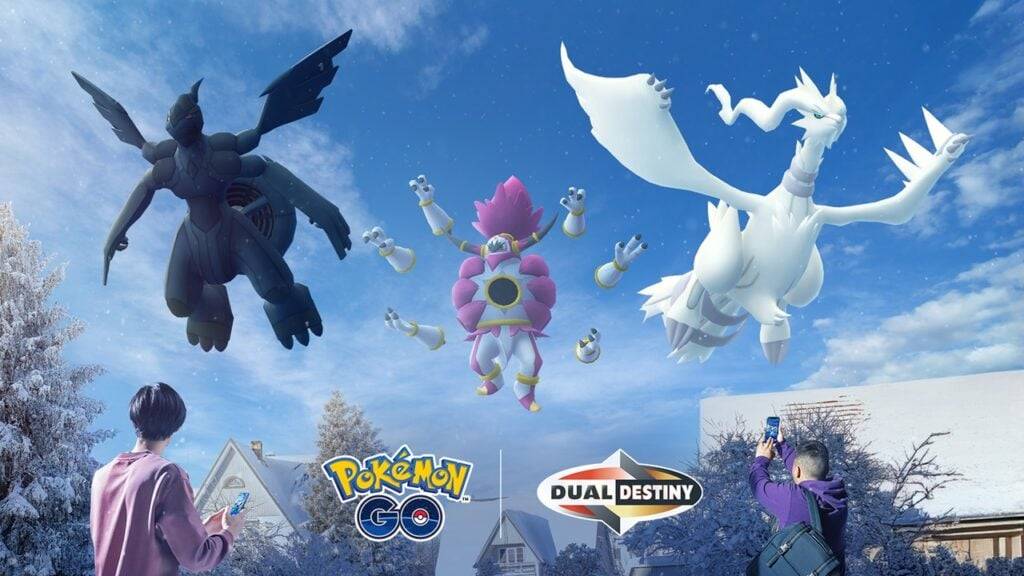 Feb 11,25Pokémon Go célèbre le Nouvel An 2025 Pokémon Go Rings en 2025 avec un événement du Nouvel An festif et plus encore! Comme le conclut 2024, Niantic célèbre l'arrivée de 2025 à Pokémon Go avec un événement spécial du Nouvel An. Cela précède l'événement Fidough Fetch et la très attendue Journée communautaire de Sprigatito. Le coup d'envoi de la nouvelle année est le
 -
 Jun 14,25Pokémon lance de la vraie encyclopédie Pokédex fabriquée par des écologistes et des comportementalistes Préparez-vous, les fans de Pokémon - The Pokémon Company entre dans le monde de la science avec une toute nouvelle encyclopédie officielle écrite par des écologistes et comportementalistes animaux experts. Découvrez ce que la pokécologie a en réserve pour les formateurs et les chercheurs.
 -
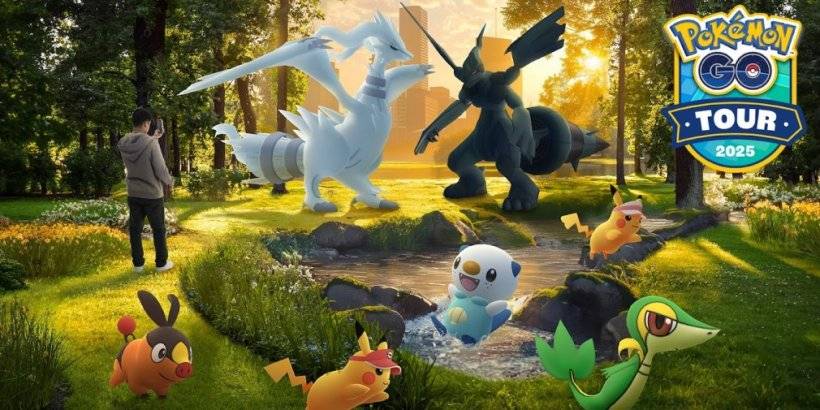 May 05,25Pokémon Go Tour: Unova révèle de nouveaux détails passionnants Préparez-vous pour un voyage passionnant alors que le Pokémon Go Tour: UNOVA s'approche, apportant une multitude de nouvelles fonctionnalités et mises à jour du jeu. Que vous soyez un fan de la nouvelle musique, des articles d'avatar exclusifs ou des recherches spéciales passionnantes, il y a quelque chose pour tout le monde alors que vous plongez dans le monde de l'ONUVA et son PO