






Ubisofts 1,16-Mrd.-Euro-Deal mit Tencent führt zur Gründung einer neuen Tochtergesellschaft für eigene Spiel-IPs
This agreement marks a pivotal turning point in Ubisoft’s strategic and operational transformation — a calculated shift from a struggling, fragmented publisher to a more agile, focused, and financially empowered studio ecosystem. Here’s what it means in practical, real-world terms, broken down across key dimensions:
🎮 1. Franchise Focus = Quality & Consistency
- Why it matters: After years of inconsistent releases, canceled projects (like Star Wars: Outlaws delays), and narrative fatigue in major series, Ubisoft now has a dedicated engine for its three flagship IPs — Assassin’s Creed, Far Cry, and Tom Clancy’s Rainbow Six.
- Practical outcome:
- Teams will no longer be split across multiple projects or forced to juggle competing priorities.
- Assassin’s Creed Shadows’ success (3M+ players) will now be leveraged with long-term roadmap planning — not just a one-off launch.
- Expect more frequent, higher-quality updates, better narrative continuity, and deeper world-building across all three franchises.
✅ Example: Rainbow Six could see more robust live operations, seasonal content, and cross-franchise events (e.g., a Far Cry map set in a post-apocalyptic Paris from Assassin’s Creed).
💰 2. Tencent’s $1.25 Billion Investment = Financial Lifeline + Strategic Stability
- Why it matters: Ubisoft was in crisis mode — stock at historic lows, mass layoffs, shrinking R&D budgets. The €1.16B from Tencent isn’t just cash — it’s a vote of confidence.
- Practical outcome:
- Immediate relief from financial pressure. No more desperate cost-cutting or project cancellations.
- Tencent’s 25% stake gives the company access to:
- Chinese market expertise (critical for global growth).
- Potential co-publishing and distribution opportunities in Asia.
- Long-term funding for ambitious game development (e.g., multi-year Assassin’s Creed epics or a full-scale Far Cry open-world reboot).
- No strings attached — Tencent is a minority investor, not a controller. Ubisoft retains creative and operational independence.
🔍 Note: Tencent has historically backed long-term IP value (e.g., Genshin Impact, Honor of Kings), so they’re likely investing in ecosystem durability, not just short-term profits.
🧩 3. The “Evergreen Game Ecosystem” Vision = New Business Model
- Why it matters: Ubisoft is moving away from the old “game-as-a-product” model to game-as-a-service (GaaS) and platform-like ecosystems.
- Practical outcome:
- Free-to-play elements in flagship titles (e.g., Assassin’s Creed F2P spin-offs, seasonal battle passes in Rainbow Six).
- Deeper social features (like Fortnite or Destiny 2): multiplayer lobbies, in-game events, player-led content, cross-play, esports integrations.
- Interconnected worlds: Imagine playing as an Assassin in a Rainbow Six mission, or using Far Cry weapons in a Tom Clancy crossover map.
🔄 Think: Assassin’s Creed becomes a living historical universe — not just games, but a global narrative platform with spin-offs, animations, and even VR experiences.
🏢 4. Organizational Rebirth: Decentralized but Unified
- Why it matters: The new subsidiary is headquartered in France but integrates studios across Montréal, Barcelona, Sofia, Quebec, and more — a truly global structure.
- Practical outcome:
- Autonomy with alignment: Each studio keeps its identity (e.g., Far Cry in Montréal, Rainbow Six in Barcelona), but they now report to a centralized, mission-focused leadership team.
- Talent retention: No more shutdowns. Projects like The Division 3 and Far Cry 7 are now secure.
- Faster decision-making: The subsidiary is built for speed — a major shift from Ubisoft’s previous bureaucratic structure.
✅ This is "Vertical Integration of Franchises": Instead of 30+ small teams scattered across 10 studios, now there’s one team per franchise, with shared R&D, live ops, and IP management.
🚀 5. Long-Term Growth Strategy: IP Expansion, Tech Innovation, New IPs
- Why it matters: Yves Guillemot says the goal is to “pioneer new intellectual properties” — not just protect the old ones.
- Practical outcome:
- The subsidiary will feed resources into emerging franchises like The Division, Ghost Recon, and Beyond Good and Evil 2.
- Tech investments in AI, procedural generation, and Unreal Engine 5 will be prioritized — e.g., using AI to generate dynamic missions in Assassin’s Creed or NPC behaviors in Far Cry.
- The success of Assassin’s Creed Shadows (3M+ players in weeks) proves demand is there — now scale it.
🌐 Potential future direction:
- Assassin’s Creed: Infinite (AI-driven, evolving open world)
- Rainbow Six: War Games (free-to-play, cross-gen, esports-focused)
- Far Cry: Elysium (a post-apocalyptic sci-fi reboot with deep player choice)
📌 In Summary: What This Actually Means for Players, Developers, and Investors
| Stakeholder | What It Means |
|---|---|
| Players | More frequent updates, richer multiplayer, deeper stories, more variety (F2P options), and interconnected worlds. Expect more fun, longer-lasting games. |
| Developers | Stable teams, better tools, clearer goals, and less fear of layoffs. This is a return to purpose. |
| Investors | A stronger balance sheet, new revenue streams (F2P, live ops), and a path to sustainable growth. The stock may finally recover. |
| Ubisoft | From a struggling company to a franchise-driven, tech-powered entertainment platform. |
🔮 Final Thought:
This isn’t just a new subsidiary — it’s a rebirth of Ubisoft’s identity.
The company is no longer chasing trends or reacting to crises. It’s building a future where iconic franchises don’t just survive — they evolve, expand, and dominate.
With Tencent’s backing, a clear vision, and a focus on long-term value, this could be the most important moment in Ubisoft’s 30-year history.
And as Yves Guillemot said:
“Today marks the beginning of a new chapter.”
And for fans, developers, and shareholders alike — that chapter starts now.
Update: The transaction is expected to close by end of 2025 — watch for official team announcements, new game reveals, and potentially a Rainbow Six F2P launch in 2026.
-
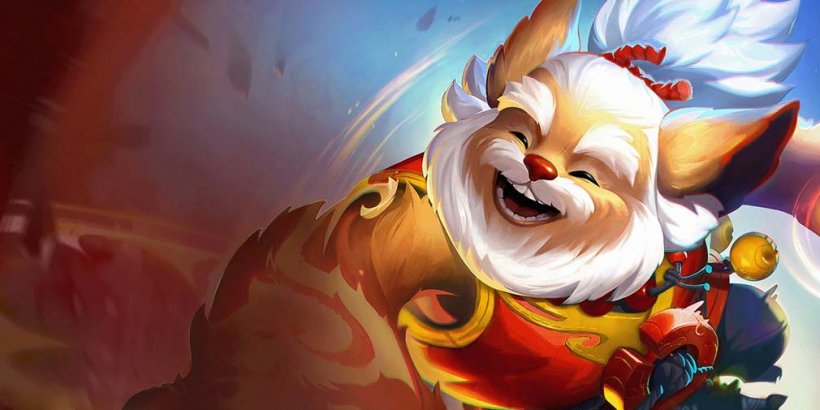 Jan 11,25Teamfight Tactics veröffentlicht Patchnotizen für das letzte Update von Inkborn Fables in Version 14.14 Teamfight Tactics Patch 14.14: Details zum letzten Inkborn Fables-Update enthüllt! Machen Sie sich bereit für das letzte Kapitel von Inkborn Fables in Teamfight Tactics mit Patch 14.14! Riot Games hat spannende Änderungen bekannt gegeben, darunter eine deutliche Erhöhung der Begegnungshäufigkeit und angepasste Begegnungsraten. Vorbereitung
 -
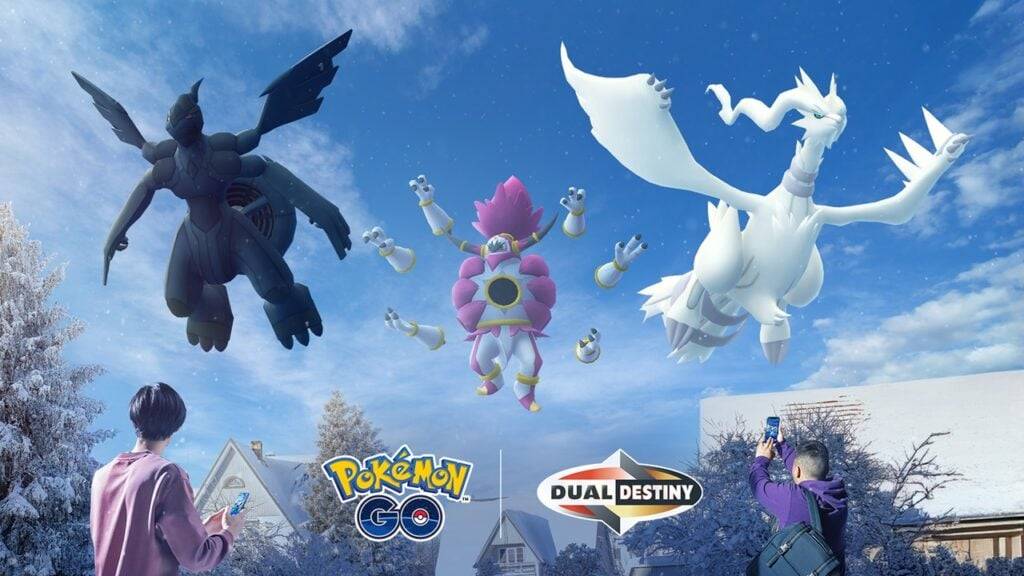 Feb 11,25Pokémon Go feiert das Neujahrs 2025 Pokémon Go go im Jahr 2025 mit einer festlichen Neujahrsveranstaltung und vielem mehr! Wie 2024 endet, feiert Niantic die Ankunft von 2025 in Pokémon Go mit einer besonderen Neujahrsveranstaltung. Dies geht dem Fidough Fetch -Event und dem mit Spannung erwarteten Sprigatito -Community -Tag voraus. Das neue Jahr zu starten ist das
 -
 Jun 14,25Pokémon startet echte Pokédex -Enzyklopädie, die von Ökologen und Behavioristen hergestellt wurden Machen Sie sich bereit, Pokémon-Fans-Die Pokémon-Firma tritt mit einer brandneuen offiziellen Enzyklopädie von Experten-Tierökologen und Behavioristen in die Welt der Wissenschaft ein. Entdecken Sie, was die Pokékologie für Trainer und Forscher gleichermaßen aufwendet.
 -
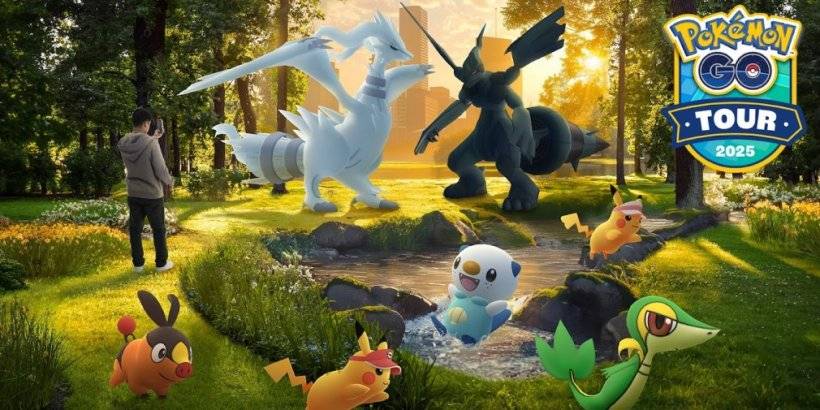 May 05,25Pokémon Go Tour: UNOVA enthüllt aufregende neue Details Machen Sie sich bereit für eine aufregende Reise, während die Pokémon Go Tour: UNOVA nähert und eine Vielzahl neuer Funktionen und Updates für das Spiel einbringt. Egal, ob Sie ein Fan von neuer Musik, exklusiven Avatar -Artikeln oder spannende besondere Forschung sind, es ist für jeden etwas dabei, wenn Sie in die Welt der Unova und ihres PO eintauchen