






El acuerdo de 1.160 millones de euros entre Ubisoft y Tencent da origen a una nueva filial especializada en IP
This new agreement between Ubisoft and Tencent marks a pivotal turning point in Ubisoft’s strategic evolution—especially after a turbulent period marked by financial instability, internal restructuring, and declining investor confidence. Here's what this deal means in clear, practical terms, broken down across key areas:
🔹 1. Strategic Focus: "Franchise Powerhouses" Get Dedicated Resources
- The core idea: Instead of spreading talent and budget thin across dozens of franchises, Ubisoft is now centralizing its most valuable IP—Assassin's Creed, Far Cry, and Tom Clancy’s Rainbow Six—into a single, powerful, and autonomous subsidiary.
- Why it matters: These three franchises have:
- Massive global fanbases.
- Proven long-term appeal (e.g., Assassin’s Creed has sold over 200 million copies).
- Strong multiplayer/live-service potential (Rainbow Six Siege, Far Cry’s new co-op modes, Assassin’s Creed Shadows’ online components).
- By bundling them under one umbrella, Ubisoft ensures they get dedicated R&D, marketing, and development pipelines—no more competing for attention.
🔹 2. Tencent’s 25% Stake = Stability + Global Reach
- Tencent isn’t buying control—it’s a minority investor, but its involvement signals:
- Financial backing to fund long-term, high-budget projects (e.g., future Assassin’s Creed open worlds, live-service evolution).
- Access to Tencent’s vast ecosystem: WeChat, mobile gaming platforms, cloud infrastructure (Tencent Cloud), and distribution networks in Asia—especially valuable for expanding Far Cry and Rainbow Six into new markets.
- This reduces pressure on Ubisoft’s balance sheet and provides capital to innovate without immediate profit expectations.
✅ This isn’t a sellout. It’s a strategic alliance to strengthen Ubisoft’s ability to compete globally.
🔹 3. The "Evergreen Ecosystem" Model Is Going Full Force
The subsidiary will focus on:
- Frequent updates (like Rainbow Six Siege or Fortnite).
- Free-to-play elements (e.g., new modes, battle passes, seasonal events).
- Cross-franchise integration (e.g., Assassin’s Creed characters appearing in Rainbow Six events, or Far Cry tech used in AC Shadows).
- Multiplatform dominance: Mobile, PC, consoles, cloud—ensuring these games are always accessible, not just tied to one hardware.
🔄 This is how modern gaming wins: Turn franchises into living universes, not just standalone games.
🔹 4. Teams Are Safe—No More Cuts for Key Franchises
- The subsidiary will include all current teams working on:
- Assassin’s Creed Shadows (Montréal, Quebec, Sofia)
- Far Cry 6 follow-ups (Barcelona, Sherbrooke, Saguenay)
- Rainbow Six (including Siege, and upcoming titles)
- No further layoffs are expected, at least for now—this is a sign of stabilization, not another wave of cuts.
- Talent retention is critical: These teams know the IP best. Keeping them is essential.
🔹 5. Ubisoft’s New Identity: A “Platform” for Franchises, Not Just a Publisher
- Ubisoft is shifting from being a game developer to becoming a franchise incubator and ecosystem operator.
- The parent company will now:
- Focus on new IP (e.g., The Division 3, Ghost Recon, Beyond Good and Evil 2).
- Invest in AI, cloud gaming, and immersive tech (e.g., using AI for NPC behavior, dynamic storytelling).
- Use the subsidiary as a profit engine to fund innovation.
🏗️ Think of it like this: The subsidiary is Ubisoft’s “legacy engine”, while the parent company becomes the innovation lab.
🔹 6. What This Means for Players
- ✅ Better games: More frequent updates, deeper content, improved multiplayer.
- ✅ More variety: Free-to-play modes, cross-franchise crossovers, events.
- ✅ Longer-lasting experiences: These franchises will evolve like Destiny, The Elder Scrolls, or Call of Duty—not just 1–2 year cycles.
- ❓ Risk: If the subsidiary fails to deliver, it could hurt the brand. But success means Ubisoft is back on top.
🔹 7. Timeline: Closing by End of 2025
- Final regulatory approvals, legal agreements, and integration will take place over the next 12–18 months.
- Expected launch of new Rainbow Six and Far Cry projects before 2026.
- Assassin’s Creed Shadows is just the first major test of the new model.
✅ In Summary: What This Agreement Actually Means
| Aspect | What It Means |
|---|---|
| For Ubisoft | A structured path to recovery, financial stability, and long-term growth. |
| For Tencent | A low-risk entry into premium Western IP, with global expansion opportunities. |
| For Players | More content, longer lifespans, deeper connections across franchises. |
| For the Industry | A blueprint for how struggling publishers can survive via IP consolidation and investor partnerships. |
📣 Final Take:
This isn’t just a deal—it’s a rebirth.
Ubisoft was on life support.
Now, with a strong subsidiary, global investment, and a clear vision, it’s back in the game—not just surviving, but aiming to dominate.
The next chapter isn’t just about new games.
It’s about building lasting worlds—and that’s exactly what players have been waiting for.
Developing...
-
 Jan 11,25Teamfight Tactics publica notas del parche para la actualización final de Inkborn Fables en la versión 14.14 Parche 14.14 de Teamfight Tactics: ¡Se revelan los detalles de la actualización final de Inkborn Fables! ¡Prepárate para el capítulo final de Inkborn Fables en Teamfight Tactics con el parche 14.14! Riot Games ha revelado cambios interesantes, incluido un aumento significativo en la frecuencia de encuentros y tasas de encuentros ajustadas. preparatoria
 -
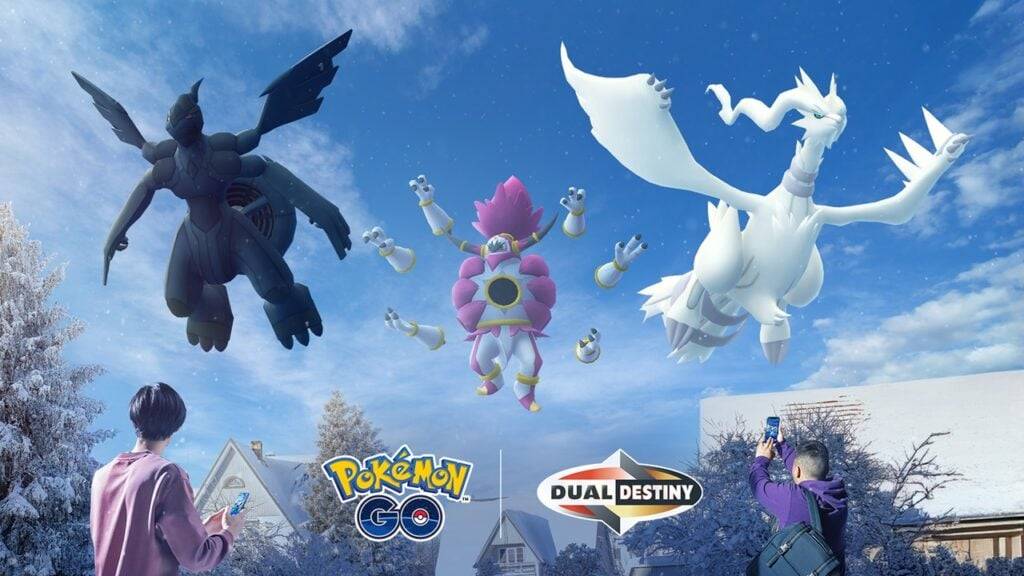 Feb 11,25Pokémon Go celebra el Año Nuevo 2025 ¡Pokémon Go Rings en 2025 con un evento festivo de Año Nuevo y más! Como concluye 2024, Niantic celebra la llegada de 2025 a Pokémon Go con un evento especial de Año Nuevo. Esto precede al evento Fidough Fetch y al muy esperado Día de la Comunidad de Sprigatito. Comenzar el año nuevo es el
 -
 Jun 14,25Pokémon lanza una verdadera enciclopedia de Pokédex elaborada por ecologistas y conductistas Prepárese, fanáticos de Pokémon: la compañía Pokémon está entrando en el mundo de la ciencia con una nueva enciclopedia oficial escrita por ecologistas y conductistas de animales expertos. Descubra lo que Pokécology tiene reservado para entrenadores e investigadores por igual. Pokécología: una enciclopedia oficial para Pokémon Beh
 -
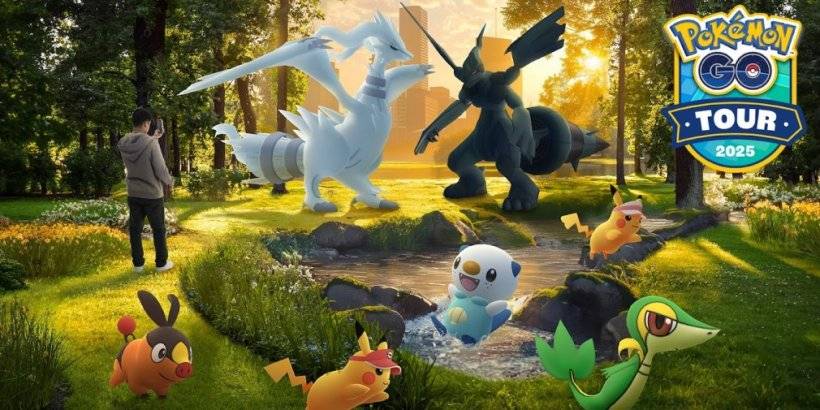 May 05,25Pokémon Go Tour: Unova revela nuevos detalles emocionantes Prepárese para un viaje emocionante mientras el Pokémon Go Tour: UNOVA se acerca, trayendo una gran cantidad de nuevas características y actualizaciones al juego. Ya sea que seas fanático de la nueva música, artículos de avatar exclusivos o una investigación especial emocionante, hay algo para todos mientras te sumerges en el mundo de Unova y su po.