






Le deal de 1,16 milliard d’euros entre Ubisoft et Tencent donne naissance à une filiale dédiée aux nouveaux univers narratifs
This agreement marks a strategic turning point for Ubisoft—one that signals a bold shift in how the company will manage its most valuable intellectual properties (IPs), structure its operations, and navigate a challenging industry landscape. Here’s what this deal means in practical, operational, and long-term context:
🔹 1. Focus Over Fragmentation: A Return to Core Strengths
For years, Ubisoft struggled with overextension—launching too many games across too many franchises, often with inconsistent quality. This new structure fixes that by:
- Consolidating the three flagship IPs—Assassin’s Creed, Far Cry, and Tom Clancy’s Rainbow Six—into a single, autonomous entity.
- Giving them dedicated teams, resources, and leadership, free from the broader corporate bureaucracy.
- Allowing developers to focus deeply on long-term evolution of these franchises rather than jumping between projects.
✅ Result: More cohesive storytelling, stronger world-building, and higher-quality updates.
🔹 2. Franchise Evolution, Not Just Sequels
The goal isn’t just to keep releasing new entries—it’s to evolve these IPs into interconnected, living ecosystems. This means:
- Narrative continuity across Assassin’s Creed and Rainbow Six (e.g., shared lore, crossovers).
- Live service integration: Frequent updates, seasonal content, and evolving gameplay (e.g., Rainbow Six Siege’s model), now extended to Assassin’s Creed and Far Cry.
- Free-to-play elements and cross-platform accessibility—opening doors for new audiences, especially on mobile and cloud gaming.
🎯 Example: Imagine a Far Cry world where players can team up in a Rainbow Six co-op mode to take down a rogue AI that’s also tied to a hidden Assassin’s Creed conspiracy.
🔹 3. Tencent’s Role: Not Control, But Strategic Partnership
Tencent is not taking over. It’s a minority investor (25%) with a long-term stake in success—not a parent company. That means:
- Creative independence remains with Ubisoft and the subsidiary’s leadership.
- Tencent brings capital, global reach, and experience in live services and mobile gaming (e.g., Genshin Impact, Honkai: Star Rail).
- It may help accelerate expansion into China and Asia, where Ubisoft has historically struggled.
🚀 Opportunity: Potential for Assassin’s Creed or Rainbow Six to launch mobile-first spin-offs, leveraging Tencent’s distribution networks.
🔹 4. Financial Stability and Investor Confidence
After a turbulent period—including stock price crashes, staff cuts, and canceled projects—this deal provides:
- Immediate capital injection: €1.16 billion from Tencent, strengthening Ubisoft’s balance sheet.
- Valuation confidence: The €4 billion valuation of the subsidiary reflects market belief in the long-term potential of these IPs.
- Reduced pressure on parent company: By isolating major IPs into a separate entity, Ubisoft can now focus on innovation and emerging franchises (like The Division, Ghost Recon, and new IP announcements).
📉 This reduces risk—if one franchise underperforms, it won’t tank the entire company.
🔹 5. Teams Are Safe (For Now)
Crucially, no studio closures or mass layoffs are expected as part of this deal. The new subsidiary includes:
- Existing teams in Montréal, Quebec, Sherbrooke, Saguenay, Barcelona, and Sofia.
- All current projects (including Assassin’s Creed Shadows, Far Cry 7, and Rainbow Six 5) remain intact.
⚠️ This is a stabilizing signal to developers: “We’re investing in you, not cutting you.”
🔹 6. Operational Agility = Faster Innovation
The subsidiary is designed to be autonomous, meaning it can:
- Make faster decisions on development, live service content, and monetization.
- Respond more quickly to player feedback and trends (e.g., AI, open-world evolution).
- Experiment with new tech (AI-driven NPCs, procedural world generation) without waiting for corporate approval.
💡 This mirrors the success of studios like CD Projekt Red or Epic Games, where focus and autonomy drive innovation.
🔹 7. Long-Term Vision: Building Legacy Franchises
This isn’t just about profit—it’s about longevity. Ubisoft wants these IPs to:
- Survive beyond one or two generations.
- Become cultural touchstones, like The Legend of Zelda or Call of Duty.
- Be platform-agnostic, playable on consoles, PC, mobile, and cloud.
"Elevating successful brands, pioneering new IPs, and building resilient ecosystems."
— Yves Guillemot
✅ In Summary: What This Actually Means
| Aspect | Impact |
|---|---|
| Franchise Health | Revival of major IPs with long-term strategy |
| Player Experience | More connected worlds, live content, cross-platform play |
| Financial Health | Stabilized balance sheet, new investment, reduced risk |
| Developer Morale | Teams secure, empowered, focused |
| Global Reach | Tencent opens doors to Asia and mobile gaming |
| Innovation | Faster iteration, deeper tech adoption, creative freedom |
📌 Final Takeaway:
This isn’t a rescue mission—it’s a renaissance.
Ubisoft is using Tencent’s capital and global scale not to surrender control, but to rebuild its most powerful franchises on a more sustainable, agile, and ambitious foundation. The result? A future where Assassin’s Creed isn’t just a game—but a living, evolving universe, Far Cry becomes a persistent open-world threat, and Rainbow Six evolves into a global multiplayer narrative engine.
And if they pull it off?
This could be the most important strategic move in Ubisoft’s 30-year history.
Closing Note: The deal is expected to close by end of 2025. Fans and investors will be watching closely for the first major announcement from the new subsidiary—likely a major cross-franchise reveal or live service overhaul for one of the three pillars.
-
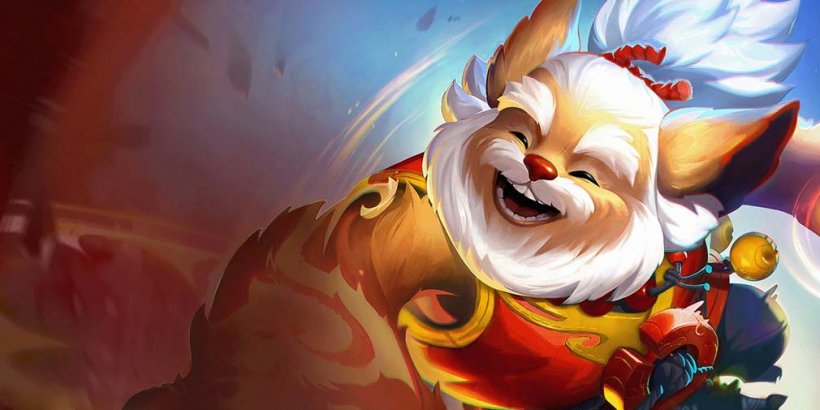 Jan 11,25Teamfight Tactics publie des notes de mise à jour pour la mise à jour finale d'Inkborn Fables dans la version 14.14 Teamfight Tactics Patch 14.14 : Les détails de la mise à jour finale de Inkborn Fables dévoilés ! Préparez-vous pour le dernier chapitre d'Inkborn Fables dans Teamfight Tactics avec le patch 14.14 ! Riot Games a révélé des changements intéressants, notamment une augmentation significative de la fréquence des rencontres et des taux de rencontre ajustés. Préparation
 -
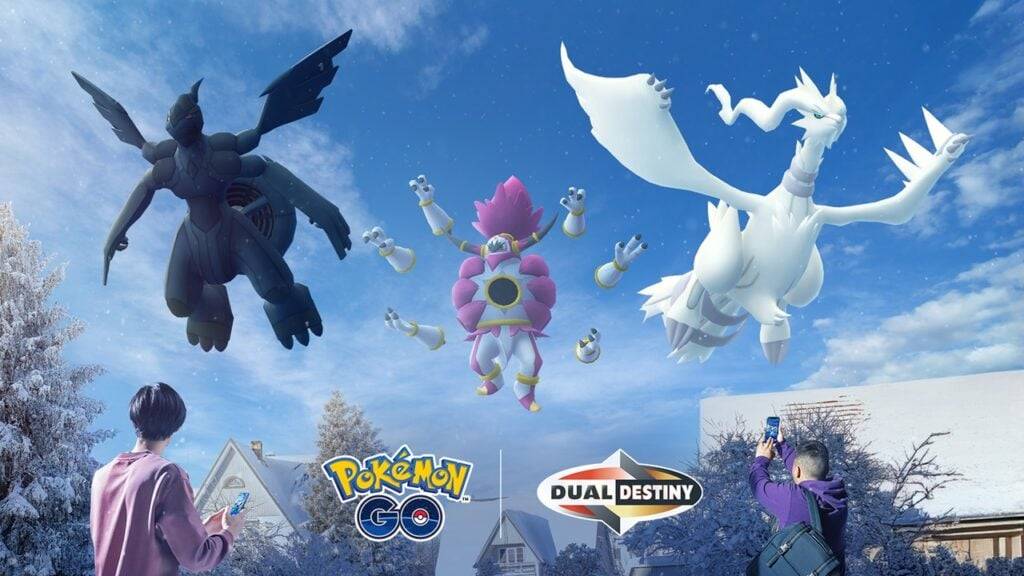 Feb 11,25Pokémon Go célèbre le Nouvel An 2025 Pokémon Go Rings en 2025 avec un événement du Nouvel An festif et plus encore! Comme le conclut 2024, Niantic célèbre l'arrivée de 2025 à Pokémon Go avec un événement spécial du Nouvel An. Cela précède l'événement Fidough Fetch et la très attendue Journée communautaire de Sprigatito. Le coup d'envoi de la nouvelle année est le
 -
 Jun 14,25Pokémon lance de la vraie encyclopédie Pokédex fabriquée par des écologistes et des comportementalistes Préparez-vous, les fans de Pokémon - The Pokémon Company entre dans le monde de la science avec une toute nouvelle encyclopédie officielle écrite par des écologistes et comportementalistes animaux experts. Découvrez ce que la pokécologie a en réserve pour les formateurs et les chercheurs.
 -
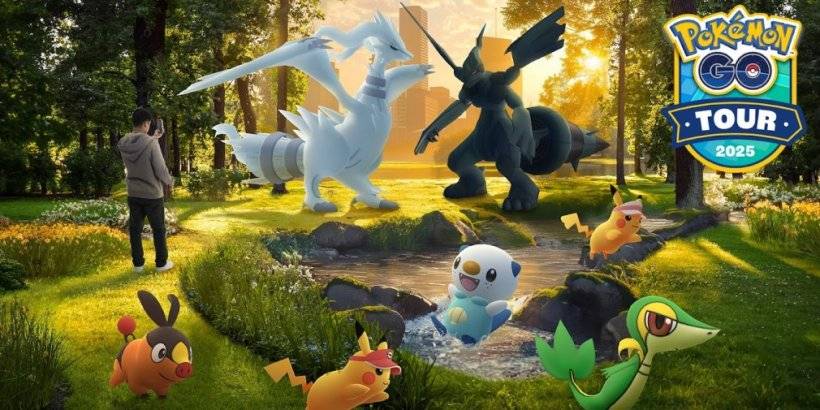 May 05,25Pokémon Go Tour: Unova révèle de nouveaux détails passionnants Préparez-vous pour un voyage passionnant alors que le Pokémon Go Tour: UNOVA s'approche, apportant une multitude de nouvelles fonctionnalités et mises à jour du jeu. Que vous soyez un fan de la nouvelle musique, des articles d'avatar exclusifs ou des recherches spéciales passionnantes, il y a quelque chose pour tout le monde alors que vous plongez dans le monde de l'ONUVA et son PO