






New Oblivion Remake: Revamped Visuals, Enhanced Gameplay
When Bethesda unveiled Oblivion Remastered earlier this week, I could hardly believe my eyes. The 2006 journey through Tamriel—once notorious for its odd, potato-faced NPCs and blurry low-res landscapes—now stands as the most visually stunning Elder Scrolls game ever created. My expectations for HD remasters had been tempered by history; releases like Mass Effect Legendary Edition and Dark Souls Remastered barely differed from their Xbox 360 predecessors. So witnessing the Imperial City, which I explored nearly two decades ago, reborn in Unreal Engine 5 with ray tracing was nothing short of astonishing. Beyond visuals, combat, RPG mechanics, and countless other details have been refined. It left me questioning: Did Bethesda and developer Virtuos mislabel this project? Shouldn’t this be called Oblivion Remake?
I wasn’t alone in my skepticism. Fans and even Bruce Nesmith, the original Oblivion’s senior designer, argued the term "remaster" might not suffice. Yet after hours of gameplay, it’s clear: While Oblivion Remastered looks like a remake, it unmistakably plays like a remaster.
The remake-like appearance stems from Virtuos’ painstaking effort—every asset redesigned from scratch. Trees, weapons, ruins—all are brand-new, meeting modern graphical standards. Lighting dazzles, textures impress, and a physics system grounds every arrow strike and sword swing in realism. NPCs retain their 2006 personalities but sport entirely rebuilt models. This isn’t a nostalgic facelift; it’s a top-to-bottom overhaul tailored for 2025. Had I seen this before the rumors, I might’ve mistaken it for The Elder Scrolls 6.
Gameplay refinements deepen the illusion: combat feels weightier, lockpicking and persuasion minigames sport sleek interfaces, the clunky leveling system is streamlined, and—finally—sprinting arrives. With so many upgrades, why isn’t this a remake?
The issue lies in semantics. The industry lacks clear definitions for "remaster" and "remake," leading to inconsistent branding. Rockstar’s GTA "Definitive Editions" barely modernized their PS2-era bones, while Crash Bandicoot N. Sane Trilogy—also a "remaster"—boasted entirely new assets. Even remakes vary wildly: Bluepoint’s Shadow of the Colossus rebuilt its original frame, while Resident Evil 2 reimagined gameplay entirely. Today, a remaster might mean preserving core design with visual polish, while a remake reinvents the experience. By that standard, Oblivion Remastered’s name holds true.
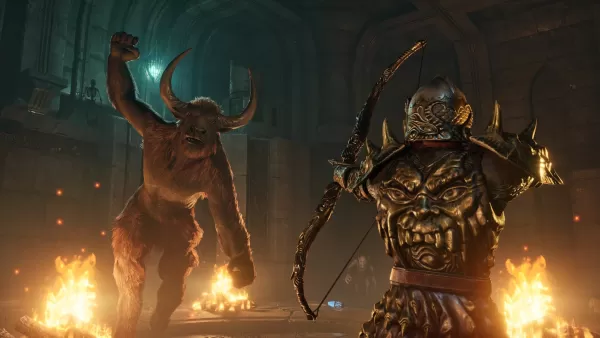
Play for an hour, and Oblivion’s vintage DNA becomes undeniable. Unreal Engine 5 breathes life into its exterior, but beneath lies the same 2006 skeleton—quirks and all. Bethesda’s statement says it best: "We upgraded every part carefully but never altered the core. It’s still a game of its era."
Proof is everywhere: loading screens behind every door, the perplexing persuasion minigame (even with its UI glow-up), cities designed like stage sets, NPCs moving like wind-up toys, and combat that—despite improvements—still lacks finesse. Even the original’s bugs remain, preserved like relics.
Compared to Obsidian’s Avowed, with its fluid combat and modern exploration, Oblivion’s age shows. Yet its charm endures—dynamic world events, superior quest design to Skyrim’s dungeon crawls, and a refreshing lack of hand-holding. A remake would modernize these systems; this project honors them. Hence: Oblivion Remastered.
Gaming borrows terms from film, where remakes start fresh while remasters polish originals. The Godfather’s 4K restoration is visually pristine but undeniably 1970s—just as Oblivion, despite its new "body" (Unreal Engine 5), retains its 2006 "brain" (gameplay and logic). As Virtuos’ Alex Murphy put it: "The original engine drives the experience; Unreal 5 realizes it for a new era."
Calling Oblivion Remastered by its true name isn’t a slight—it’s a benchmark. This is the gold standard other AAA remasters should meet, surpassing cash-grabs like GTA: The Trilogy or half-measures like Mass Effect Legendary Edition. It’s a labor of love: remake-level artistry paired with remaster authenticity. And that’s precisely its triumph.
-
 Jan 11,25Teamfight Tactics drops patch notes for final update of Inkborn Fables in version 14.14 Teamfight Tactics Patch 14.14: Final Inkborn Fables Update Details Unveiled! Get ready for the final chapter of Inkborn Fables in Teamfight Tactics with patch 14.14! Riot Games has revealed exciting changes, including a significant increase in encounter frequency and adjusted encounter rates. Prepa
 -
 Feb 11,25Pokémon Go Celebrates New Year's 2025 Pokémon Go Rings in 2025 with a Festive New Year's Event and More! As 2024 concludes, Niantic is celebrating the arrival of 2025 in Pokémon Go with a special New Year's event. This precedes the Fidough Fetch event and the highly anticipated Sprigatito Community Day. Kicking off the new year is the
 -
 Jun 14,25Pokémon Launches Real Pokédex Encyclopedia Crafted by Ecologists and Behaviorists Get ready, Pokémon fans—The Pokémon Company is stepping into the world of science with a brand-new official encyclopedia written by expert animal ecologists and behaviorists. Discover what Pokécology has in store for trainers and researchers alike.Pokécology: An Official Encyclopedia For Pokémon Beh
 -
 May 05,25Pokémon Go Tour: Unova Reveals Exciting New Details Get ready for an exciting journey as the Pokémon Go Tour: Unova approaches, bringing a host of new features and updates to the game. Whether you're a fan of new music, exclusive avatar items, or thrilling Special Research, there's something for everyone as you dive into the world of Unova and its Po